
For twenty years, startup accelerators were one of the most important inventions in early-stage entrepreneurship.
They gave founders structure. They made building less lonely. They compressed years of learning into short, intense programmes. They opened doors to mentors, investors, credibility, and community that would otherwise have taken a decade to earn.
The best accelerators changed the trajectory of thousands of companies. They made "demo day" a global milestone. They gave investors a more efficient way to discover talent, and gave universities, corporates, and governments a way to participate in innovation without building full venture funds.
But the world that produced the first generation of accelerators is not the world founders face today.
The bottleneck has shifted.
Founders no longer need only access. They need execution capacity — senior operators who can ship investor-grade milestones before the next round, with technical, commercial, financial, and go-to-market work completed while cash is still tight.
They need proof before capital.
And the accelerator model has not caught up.
1. What Gen I Accelerators Got Right
It would be a mistake to dismiss them.
The original accelerator model was designed for a market where the main bottlenecks were knowledge, network access, investor visibility, and early-stage confidence. For that world, it worked.
It created structure for chaotic founders. A fixed-term programme forces founders to prioritise, compress learning, and move toward a visible milestone. Even an imperfect programme creates urgency.
It created social proof. Getting into a respected accelerator gives a startup an external signal — one that matters because early-stage investing is built on proxies. An accelerator brand says: someone credible already selected this team.
It improved access. Accelerators gave founders access to people they could not easily reach alone: mentors, angels, VCs, corporate partners, lawyers, and other founders. A single strong introduction can change a company's trajectory.
It professionalised fundraising. The demo-day model forced founders to sharpen the pitch, simplify the narrative, present traction, and ask for capital. In markets where founders had no investor access, this was genuinely transformative.
It helped ecosystems form. Accelerators became local startup infrastructure — a way for cities, universities, and corporate sectors to gather founders, mentors, investors, and policymakers around a repeatable programme.
The model spread because it was legible and scalable. Everyone could understand the offer: join the programme, get support, meet investors, raise money.
In the first phase of the market, that was a breakthrough.
2. Why Gen I Is No Longer Enough
The problem is not that Gen I accelerators failed. The problem is that their design assumptions are now incomplete.
Mentorship does not equal execution. Most accelerators are built around advice. Founders meet mentors, attend workshops, receive feedback, refine strategy, update their pitch. That can help. But advice does not ship product, close enterprise customers, fix a broken architecture, or prepare a regulatory pathway. The missing layer is accountable expert execution.
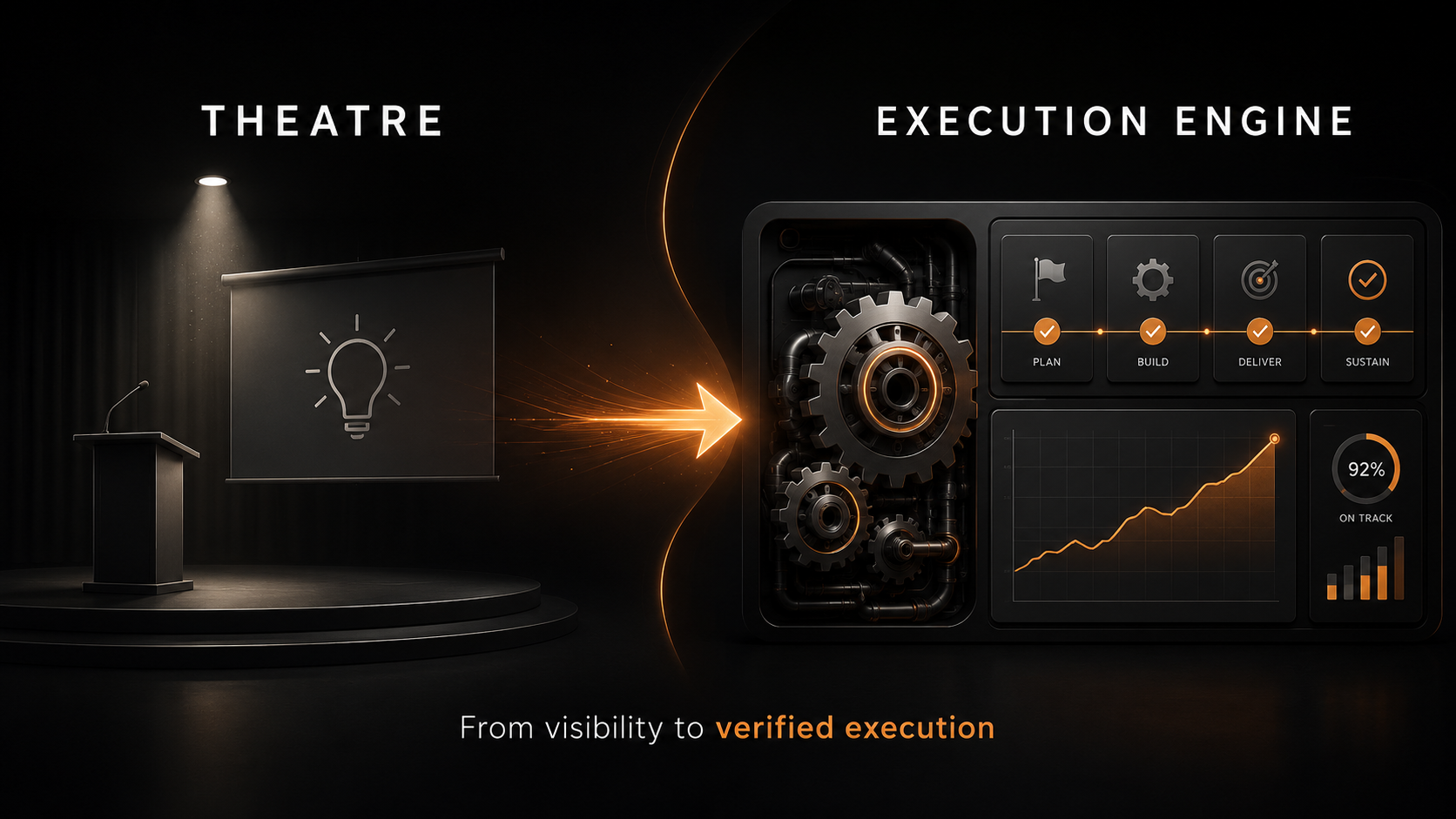
Demo days can optimise for theatre. When the programme culminates in a pitch event, it naturally optimises founders toward pitching. The danger is that founders polish slides when they should be shipping the milestones that would make those slides credible. The right question is not "is this startup pitch-ready?" It is "what has this startup shipped that changes its fundability?"
Mentors are under-incentivised. Accelerators sit on valuable expert networks that are often poorly activated — occasional office hours, panel appearances, informal feedback. This is not because mentors are bad. It is because the incentive model is weak. Goodwill does not scale. The best people need a reason to commit.
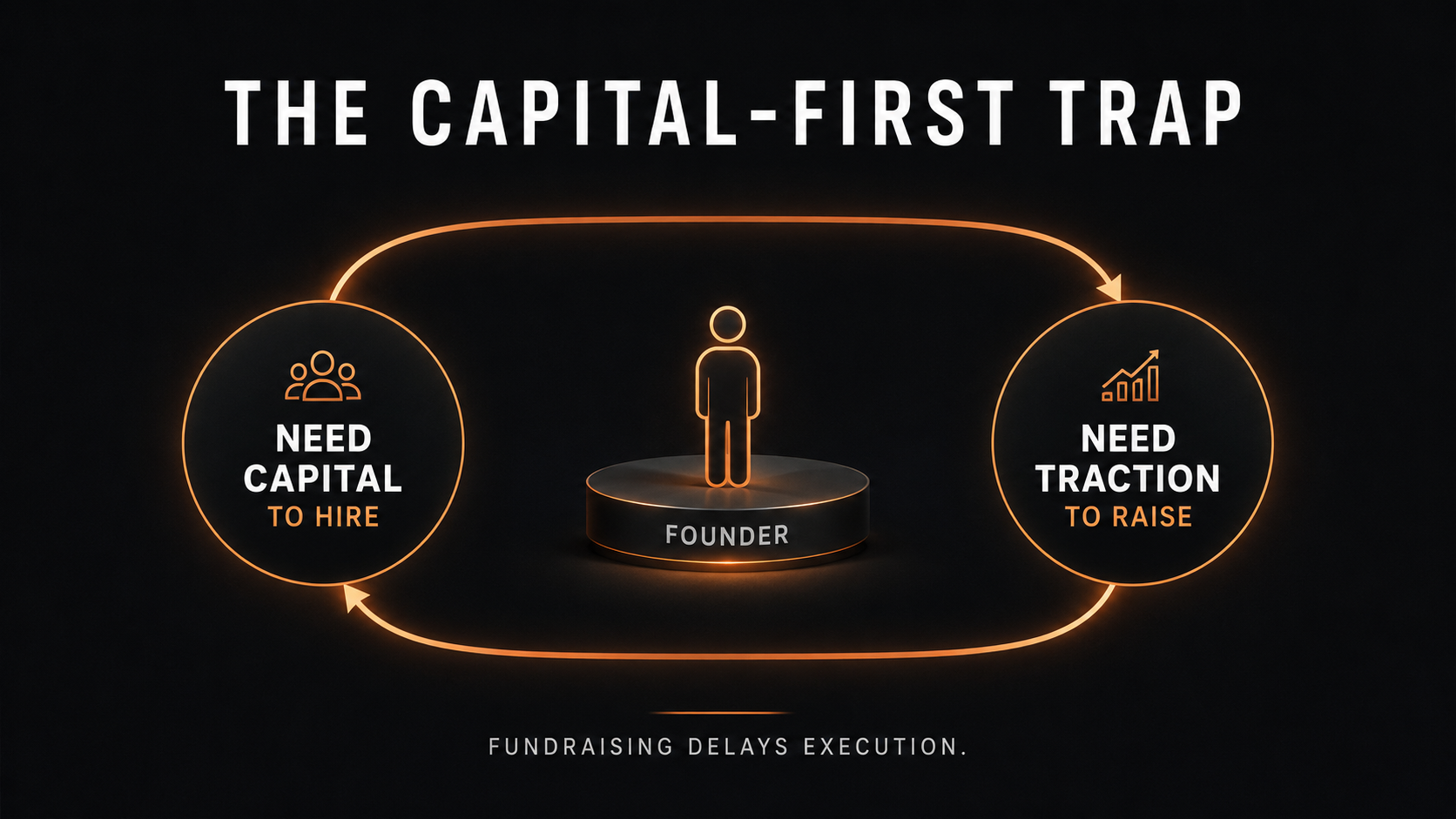
Founders still lack the cash to hire the right people. Senior fractional operators — CTOs, CFOs, CMOs, regulatory experts, AI engineers — are expensive. At pre-seed and seed, founders usually cannot afford them. So they delay the work, hire cheaper people, or wait for a funding round that may take months and may never close. This creates the capital-first trap: founders need execution to raise capital, but they need capital to pay for execution.
Accelerators struggle to prove impact. Many can report activity — applications, cohort numbers, mentor hours, demo-day attendees, funding raised later. But activity is not impact. The harder question is: which milestones were shipped because of this programme? Which bottlenecks were removed? Which investor risks were reduced? Without proof of execution, accelerators struggle to justify their existence to boards, sponsors, and public funders.
Their business models are often fragile. Grants can disappear. Sponsors change priorities. Cohort fees create adverse selection. Long-dated equity may take a decade to produce returns, if it ever does. The result: organisations that help startups build companies often have not built sustainable companies themselves.
3. Why the Market Is Ready for a New Model
Four forces are converging.
Capital is more selective. The strongest AI and deeptech companies can attract significant funding. But many good pre-seed and seed founders face longer cycles, more scrutiny, and higher traction expectations before any serious conversation begins. Founders must produce more evidence before they receive capital — and accelerators built around pitch preparation cannot create that evidence for them.
AI has made building faster, but competition harder. If everyone can ship a prototype quickly, features become easier to copy. The moat shifts from "can you build?" to "can you execute faster, prove value sooner, and compound learning before the market loses patience?" This increases the need for execution discipline, not just technical ability.
Senior fractional talent is becoming more available. Experienced operators increasingly prefer fractional work, portfolio careers, and project-based mandates over full-time executive roles. This is a major opportunity — accelerators can become structured access points to that talent. But only if they can solve scoping, incentives, governance, and settlement.
Ecosystem builders need new economics. Universities, incubators, accelerators, studios, and corporate innovation teams all face the same question: how do we support companies more deeply without becoming a consultancy, a grant-dependent programme, or an underfunded fund manager? They need a way to activate their networks, prove impact, and create upside — without building expensive infrastructure from scratch.
4. What Is a Gen II Accelerator?
A Gen II Accelerator is not just a better accelerator. It is an execution-financing ecosystem.
It keeps the best parts of Gen I: selection, community, investor visibility, mentor access, programme structure, and brand trust.
But it adds the missing infrastructure: execution budgets, senior expert marketplaces, milestone-based Tickets, blended cash and equity compensation, governance rails, Proof-of-Execution reporting, and operator economics.
Gen I helps founders learn, connect, and pitch. Gen II helps founders scope, finance, execute, verify, and raise from proof.
That is a different category entirely.
5. How It Works in Practice
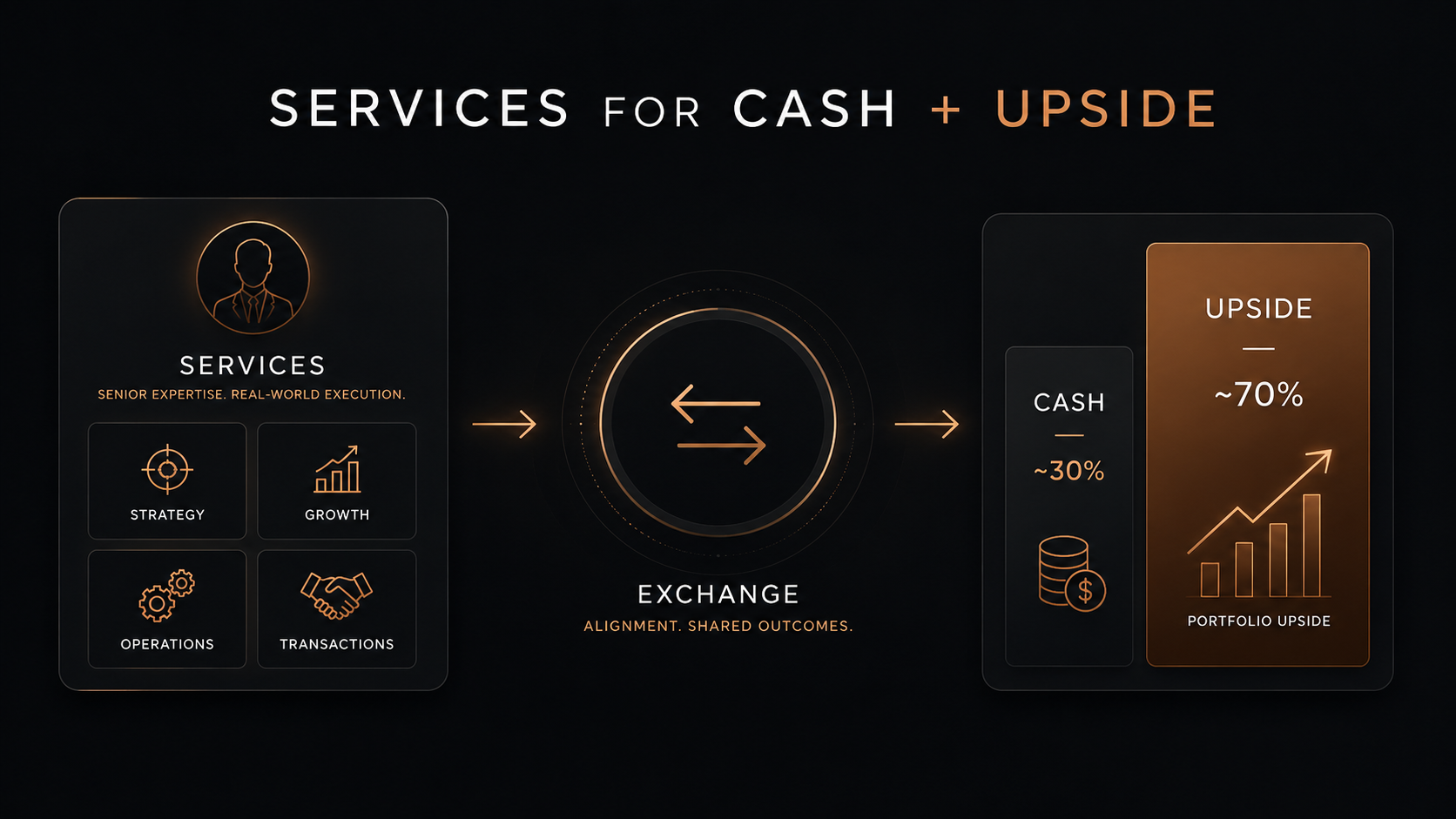
Grow Now, Pay Later. A selected startup converts part of its future upside into an execution budget. That budget pays vetted senior experts through a blended settlement model — part cash, part portfolio-linked equity. Founders access senior execution earlier while preserving runway. Instead of needing £100,000 in cash to complete £100,000 of work, the founder may need only a fraction of that in cash, with the remainder settled through a governed structure.
The principle is not "free work." It is aligned execution. Experts are paid for shipped outcomes, and their upside is linked to the success of the portfolio.
Tickets: the atomic unit of execution. In a Gen II Accelerator, the unit of support is not a mentoring session. It is a Ticket — a scoped, milestone-gated deliverable that defines the outcome, the acceptance criteria, the timeline, the required expert profile, and the settlement trigger.
This changes behaviour. Founders must define what "done" means. Experts must commit to outputs. Operators can monitor progress. Investors can see evidence. The ecosystem moves from conversation to execution.
Proof-of-Execution. Gen II Accelerators need to prove what changed. PoE is the reporting layer that records what was scoped, who executed it, what shipped, what KPI moved, and what risk was reduced. Instead of telling investors "we had great mentor sessions," the accelerator can show product milestones shipped, sales systems implemented, compliance foundations built, and investor-readiness gaps closed.
Expert alignment. Experts are no longer giving advice on goodwill. They bid on scoped Tickets, deliver work, earn cash, and build portfolio-linked upside. Mentors become execution partners. The network becomes an asset.
Governance and settlement. No delivery, no settlement. Work is scoped. Compensation rules are explicit. Economic rights are governed. Reporting is auditable. This protects founders from paying for vague advice, protects experts by making terms clear, and protects operators with a defensible process.
6. What This Means for Existing Accelerators
The biggest opportunity is not to replace Gen I accelerators. It is to upgrade them.
Most accelerators already have the hard-to-build assets: founder deal flow, trust in a specific market, alumni networks, mentor relationships, sponsor credibility, and community density. What those assets lack is activation.
Gen II infrastructure turns them into an execution engine.
From cohorts to continuous execution. Startups join, graduate, and often lose structured support after demo day. Gen II can run continuously — founders access execution support when they need it, not only during a cohort window. A founder with an urgent GTM bottleneck or technical crisis does not need to wait for the next programme.
From mentor goodwill to expert economics. Creating a real economic model for expert participation attracts better experts, asks more of them, and measures their contribution. The network stops being a loose community and starts being a market.
From sponsor logos to measurable outcomes. Corporate sponsors are tired of innovation theatre. They want pilots shipped, integrations completed, internal teams exposed to useful innovation, and board-ready proof of impact. Gen II gives accelerators a stronger sponsor proposition because it connects startup activity to measurable execution.
From fragile to financially resilient. Execution-linked revenue — transaction fees, memberships, operator economics, portfolio-linked upside — makes the accelerator more durable than one built on grants and long-dated equity alone.
7. What Gen II Gives Founders That Gen I Cannot
For founders, the difference is direct.
Gen I helps the founder understand what to do. Gen II helps the founder get it done.
Faster execution before fundraising. Instead of spending months fundraising while the business stalls, founders use an execution budget to deploy senior experts, ship the next milestones, and raise from a stronger position. The proof comes before the round, not after.
Better talent without full-time hiring risk. Gen II gives founders access to fractional senior experts for specific milestones — the right expertise at the right moment, without building an oversized team too early.
Less cash burn. A founder who can complete key work with less cash has more time to find customers, improve the product, and avoid desperate fundraising terms. Cash is not just money. Cash is time.
Cleaner governance than ad hoc sweat equity. Many founders already try to compensate people with equity. The problem is that informal deals create confusion, resentment, and cap-table risk. Gen II provides structured rules: work is scoped, settlement is linked to verified delivery, and economic rights are governed from day one.
Investor-grade evidence. Investors do not fund effort. They fund evidence. Gen II helps founders create it — shipped work, verified milestones, KPI movement, stronger reporting. That gives the founder a better fundraising story because it is not just a story. It is proof.
8. The Gen II Stack
A true Gen II Accelerator operates across ten layers:
Selection — judgement on which founders are coachable, execution-first, and commercially serious enough to receive execution finance.
Diagnosis — identifying the real bottleneck: product, sales, compliance, technical debt, investor readiness, or operations.
Ticket scoping — converting the diagnosis into executable, verifiable work.
Expert matching — pairing the right operator to the right Ticket based on skill, sector, stage, and delivery track record.
Execution financing — the blended structure that reduces cash pressure while aligning incentives.
Verification — the founder and operator confirm delivery against acceptance criteria.
Settlement — experts paid only when the work is accepted.
Proof-of-Execution — milestone, evidence, KPI impact, and budget use recorded.
Portfolio reporting — operator-level visibility across the whole cohort.
Follow-on readiness — verified progress used to raise more capital on better terms.
This is the accelerator rebuilt from programme to operating system.
9. Five Questions Every Accelerator Should Ask Now
The upgrade path is available. The accelerators that move early will be the ones that matter in five years.
Are we helping founders execute, or mainly helping them think? If the programme is mostly workshops and mentoring, it is vulnerable. Founders will increasingly choose programmes that help them ship.
Are our mentors economically aligned? If the network is built on goodwill, it will not scale. The best accelerators will turn mentors into properly incentivised execution partners.
Can we prove what changed because of us? If reporting is anecdotal, sponsors and boards will eventually demand more. Proof-of-Execution should be a core asset, not an afterthought.
Do we have sustainable economics? If the programme relies on grants or equity that may take a decade to mature, the model is fragile. Execution-linked revenue changes that equation.
Can founders access execution and capital together? The strongest programmes will not separate the two. They will help founders fund and deliver the milestones that unlock the next round.
Conclusion: The Accelerator Rebuilt for the Next Decade
Gen I accelerators were built for a world where founders needed access. Access to knowledge, mentors, investors, and credibility.
Gen II accelerators are built for a world where founders need execution. Execution before fundraising. Execution with less cash. Execution with aligned experts. Execution that is scoped, governed, verified, and reported. Execution that turns momentum into fundability.
This does not make Gen I accelerators obsolete. It gives them a path forward.
The accelerators that upgrade will become more useful to founders, more credible to sponsors, more valuable to investors, and more financially sustainable as businesses. The accelerators that do not upgrade may still run good programmes — but they risk becoming advice factories in a market that increasingly rewards proof.
The next generation of startup ecosystems will not be defined by who hosts the best demo day. It will be defined by who helps founders ship the most important work before the market loses patience.
Execute earlier. Use less cash. Deploy aligned experts. Build proof. Raise later from a position of strength.
That is not just a better accelerator. That is the operating system for the next era of startup creation.