
Let me tell you about Darren.
He's a fractional CMO based in Glasgow. By the end of last year, he had what most would consider a stable setup: two anchor clients, doing solid work, creating real value. Then life happened.
When Anchors Disappear
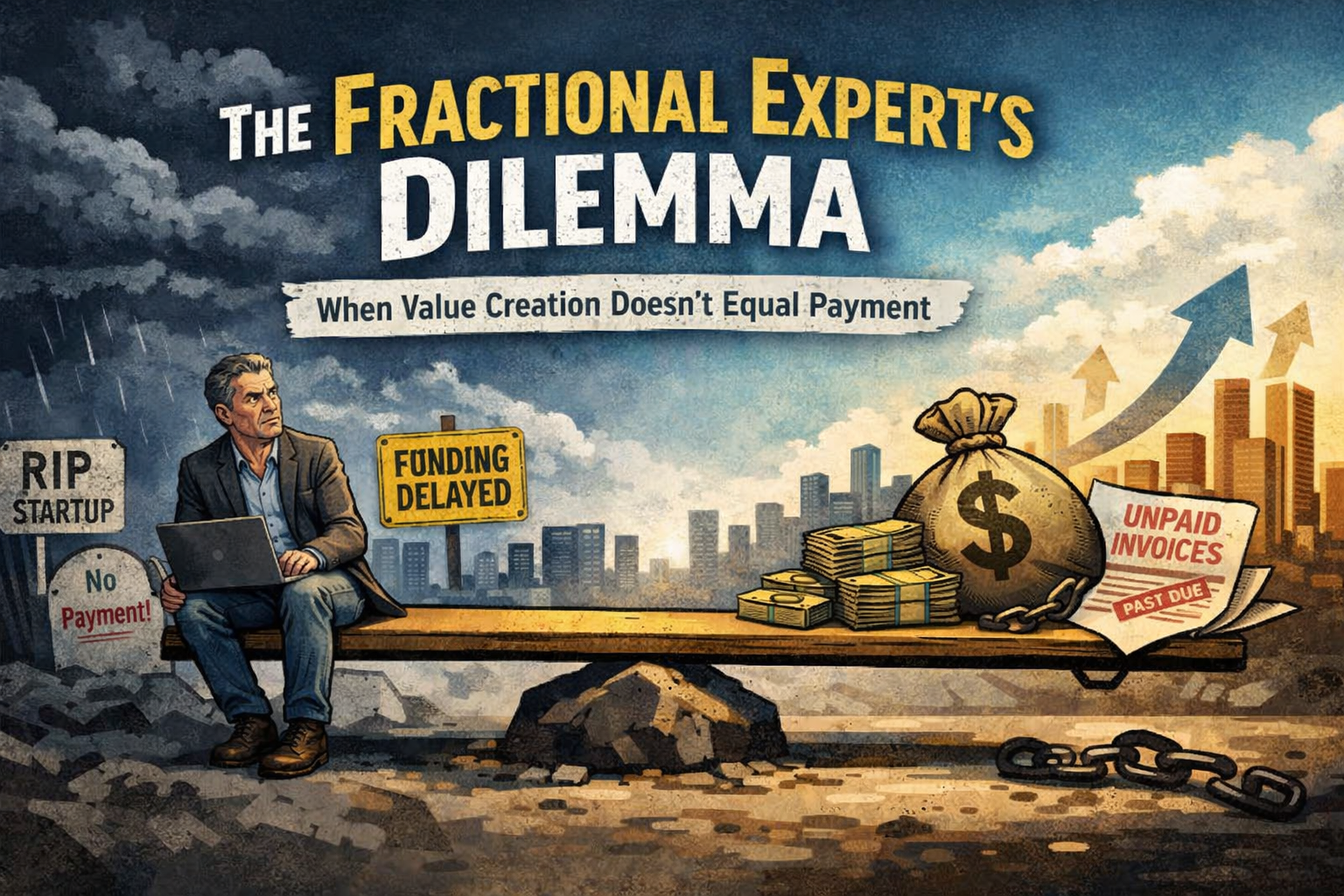
Client one started struggling to raise capital. Cash tightened. Invoices went unpaid. Darren had to walk away—not because his work wasn't delivering results, but because value doesn't pay rent when cash evaporates.
Client two? The founder died suddenly. Darren stayed on anyway, helping sell the platform without compensation, because that's what decent people do when tragedy strikes.
Within weeks, both anchors were gone.
Now Darren is back out there, rebuilding his client base. Not because he failed at his job. Not because he didn't create value. But because fractional experts sit downstream of founder risk, fundraising risk, and life risk—without any structural protection.
This isn't a cautionary tale. It's the default operating condition for fractional talent.
The Structural Problem No One Discusses
Fractional experts absorb enormous risk: founder decisions, funding timing, unexpected tragedy, payment delays. Yet they're still compensated as suppliers, not partners in execution.
They only get paid when fundraising succeeds, cash is flowing, and nothing unexpected disrupts the business. That's not strategic alignment—that's structural fragility.
Why Brilliant Operators Exit the Fractional Model
This dynamic explains why so many talented fractional professionals burn out on this model, retreat to "cash only" engagements, or quietly leave the startup ecosystem entirely.
It's not because they don't believe in founders or lack commitment to the work. It's because the system forces them to carry asymmetric downside with no portfolio upside.
Execution happens first. Compensation happens last—if at all.
The Uncomfortable Reality
Darren's story isn't an outlier. It's standard operating procedure in the fractional world.
Until we find ways to make execution itself financeable—not just advice, not just goodwill, but actual implementation work—this story will keep repeating with different names, different cities, same ending.
How Execution Capital Changes the Equation
Execution Capital exists to fix the exact problem Darren faced.
Instead of asking fractional experts to take all the risk and hope cash eventually shows up, it changes how execution gets paid for. When an expert works through Execution Capital, they're paid for delivery, not promises. Each engagement is clearly scoped into concrete work—what we call "tickets"—with defined outcomes, and payment isn't entirely dependent on a single startup's current cash position.
Here's how it works in practice: part of the compensation is paid in cash immediately, while the remainder is tied to the portfolio of companies the expert helps build—not just one fragile startup. Experts don't end up on messy cap tables and don't chase unpaid invoices. If a startup fails or stalls, the downside is capped and transparent from day one.
This transforms fractional work from single-client dependency into portfolio exposure, and from "hope I get paid later" into structured, governed execution. No cold pitching. No chasing founders for money. No silent absorption of risk.
Interested—But Only If It's a Real Match?
Execution Capital doesn't broadcast opportunities or spam experts.
If you're a senior fractional operator and this resonates, you can leave your details here: https://tally.so/r/zxMPGk
You'll only be contacted when there's a genuine execution match aligned with your skills, availability, and risk appetite. No newsletters. No marketplaces to browse. Just real work, when it makes sense for both sides.
The fractional economy has unlocked access to senior talent for early-stage companies that couldn't otherwise afford it. But we haven't solved the fundamental mismatch: experts who create value deserve more stable compensation structures than those who simply advise on it.
The question now isn't whether this problem exists—Darren's story proves it does. The question is whether we're ready to build systems that protect the people doing the actual work.
What's your experience with fractional work? Have you seen similar patterns? I'd be interested to hear how others are navigating these structural challenges.
 Kevin Monserrat